Gardener's Rain (2026) Re-Mastered for Vinyl
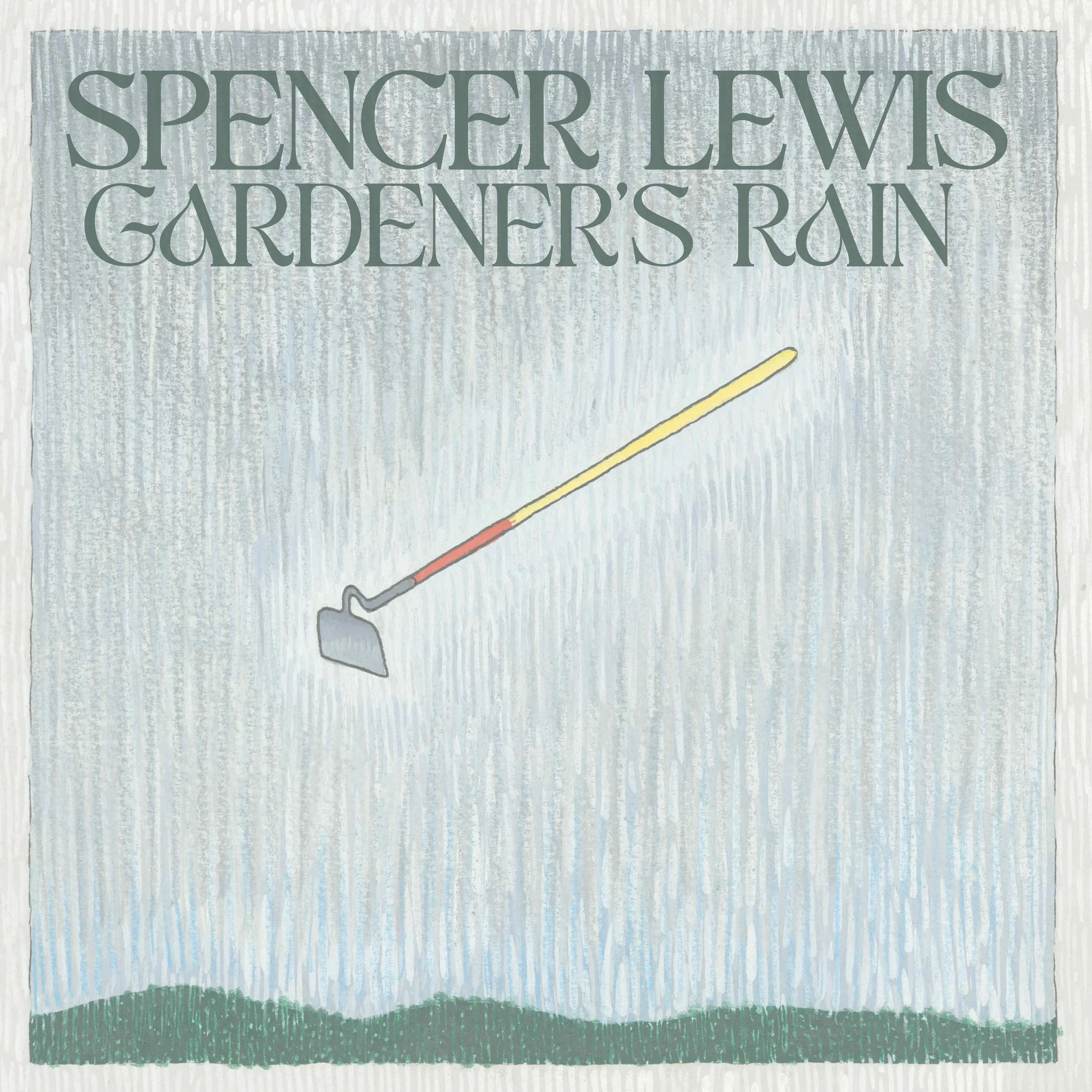
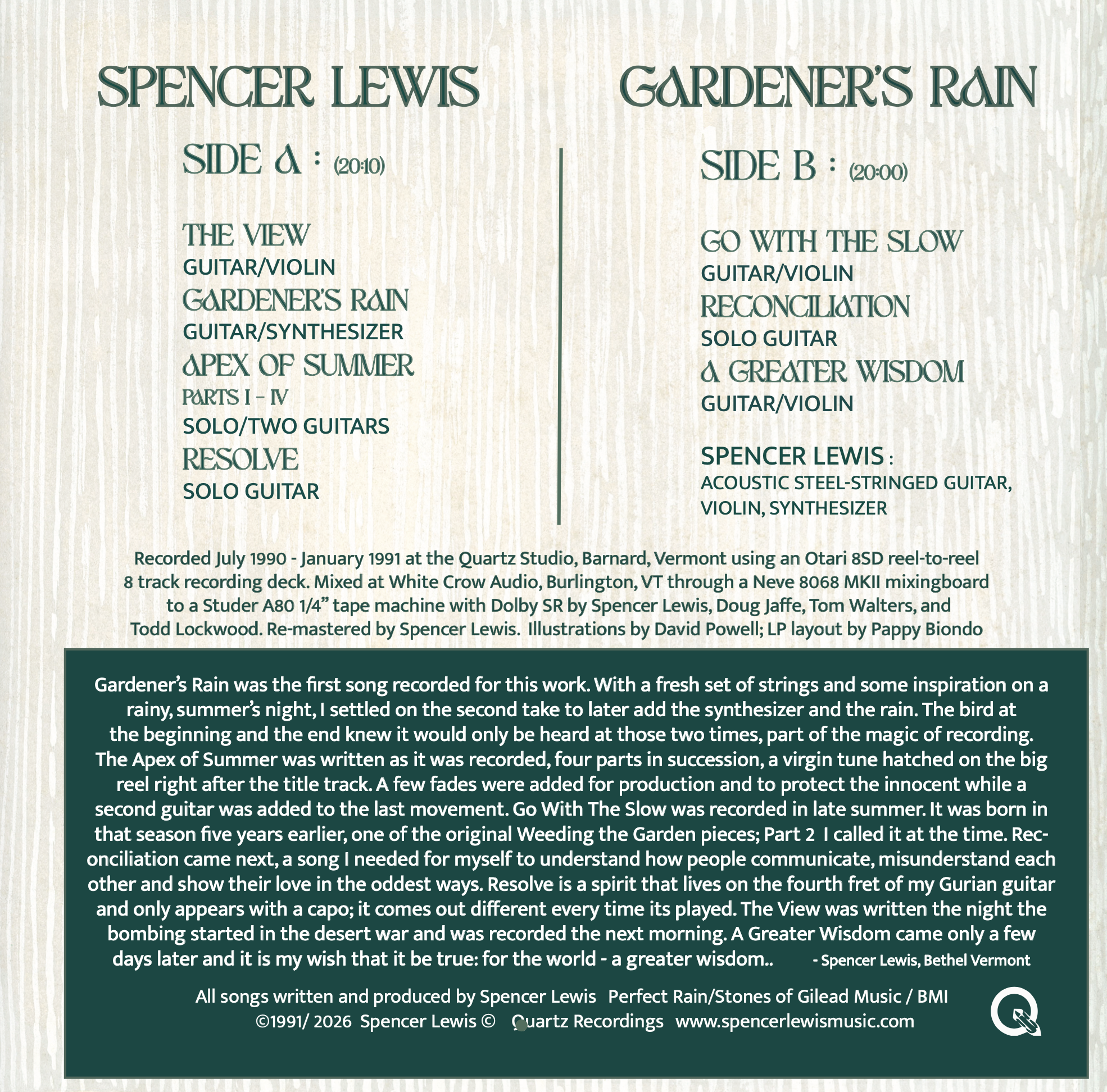
In 1991, Gardener’s Rain was officially my fourth album but first to be released on CD, so it’s only appropriate it now becomes Quartz Recordings’ first ever vinyl record. There were many hurdles to overcome before this became a reality including a remix of the title track, a re-mastering of the pristine all-analogue final mixes, and a full graphics overhaul.Let’s take a closer look at those three elements:
The album was recorded in Barnard, Vermont from July 1990 to January 1991 using the Otari 1/2” reel to reel tape deck that I’d purchased from Rooster Records.
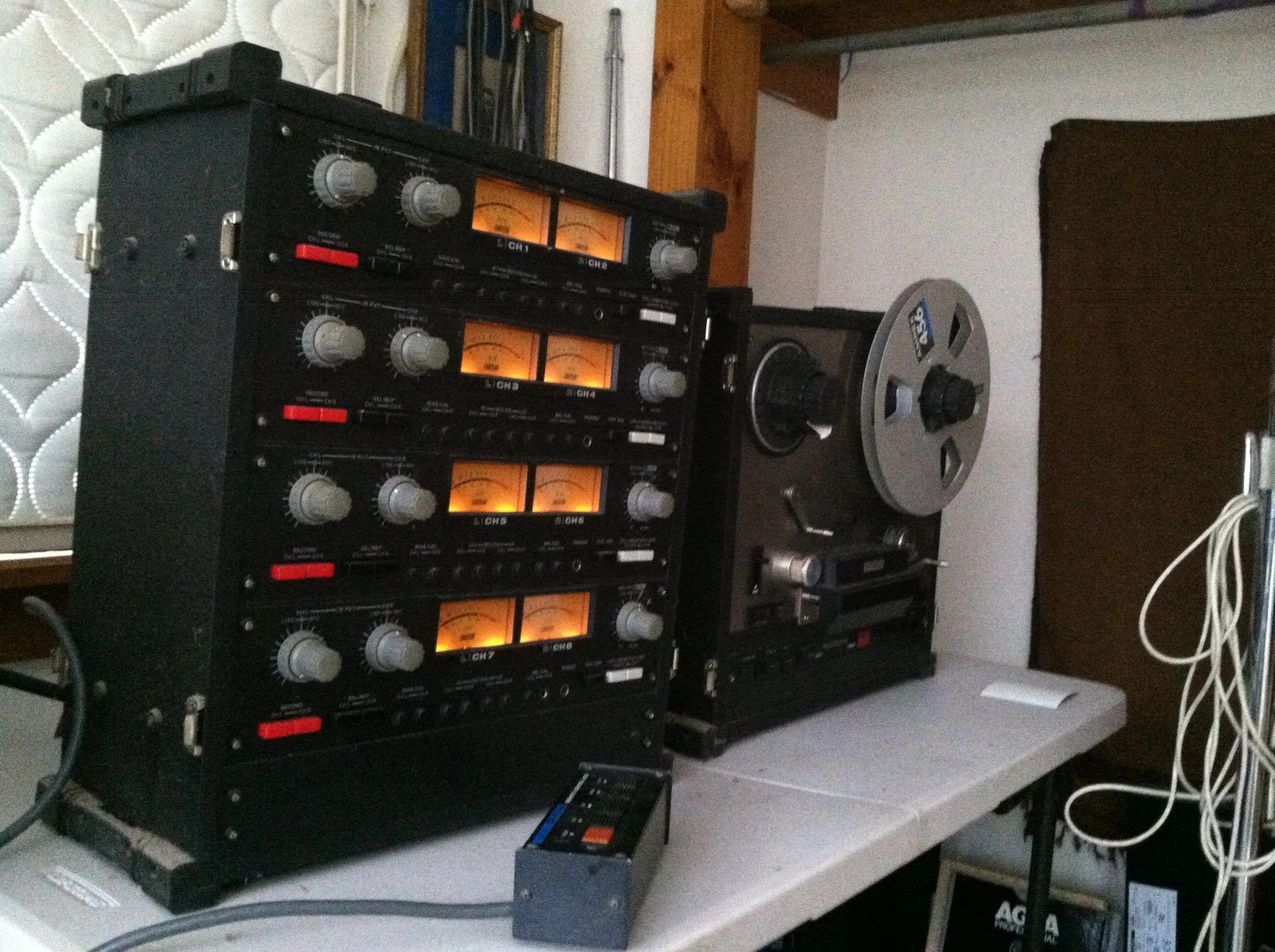
Otari 8SD reel-to-reel recording deck
I’d attributed much of the the success of my best selling second album In the Bosom of the Green Mountains to sweetening the master at Burlington, Vermont’s premier studio White Crow Audio, so I decided to bring the Otari into their control room and do a full multi-track mix using their Neve 8068 MKII mixingboard and mastering to their Studer A80 with Dolby SR. Maybe these model numbers mean nothing to the casual listener but this is nothing short of legendary analog glory: the Neve board is widely considered one of the best vintage analog consoles ever made yielding sonic characteristics like warm, airy, punchy, and a 3-dimensional soundscape. Rounding out the sound was the iconic Lexicon 480L with its lush, dense reverbs that my violin loved. These were the days when mixing was a performance in itself, with no automation or digital recall, and all the moves had to be rehearsed.
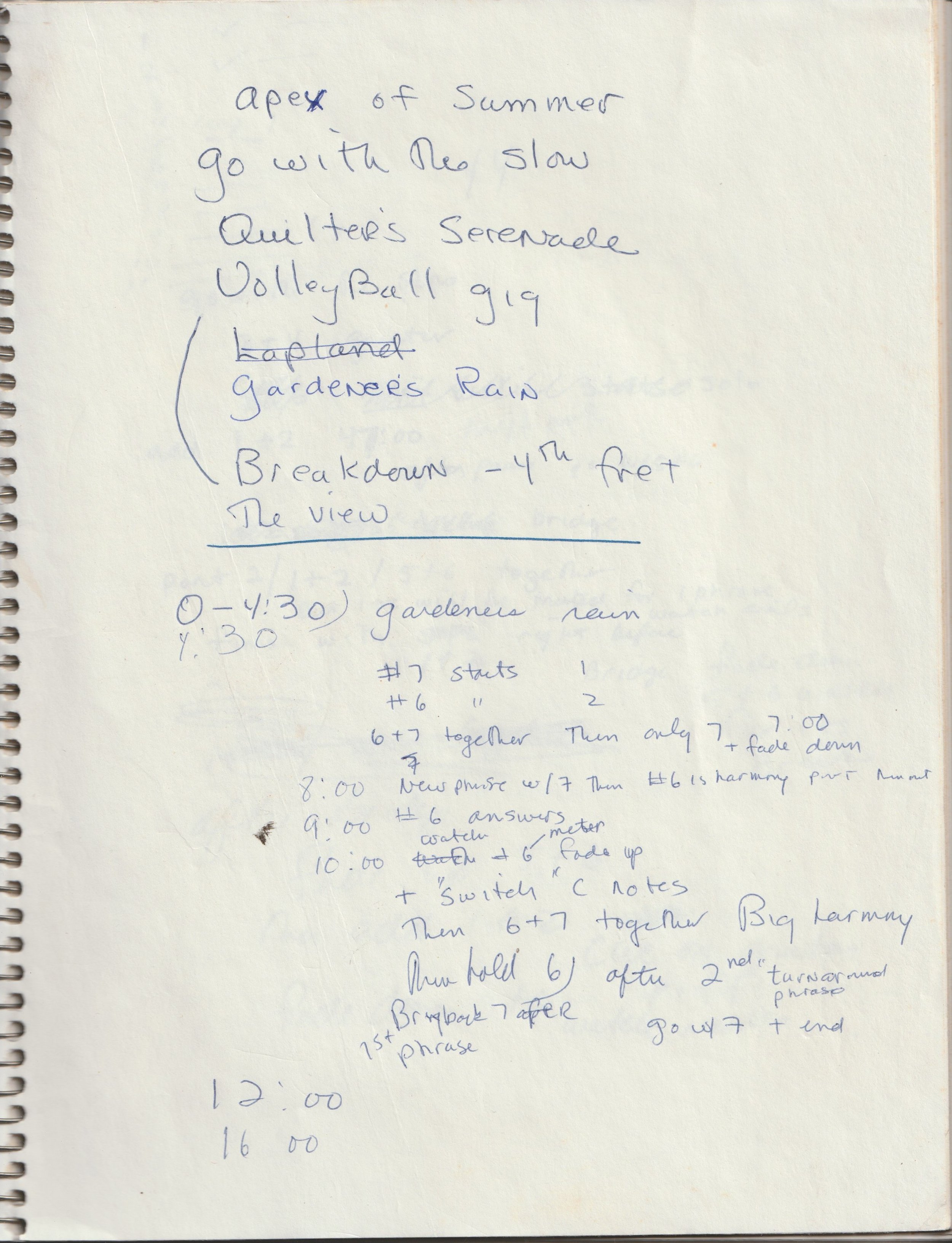
Original song titles for the album and mixing notes for the “Gardener’s Rain” track
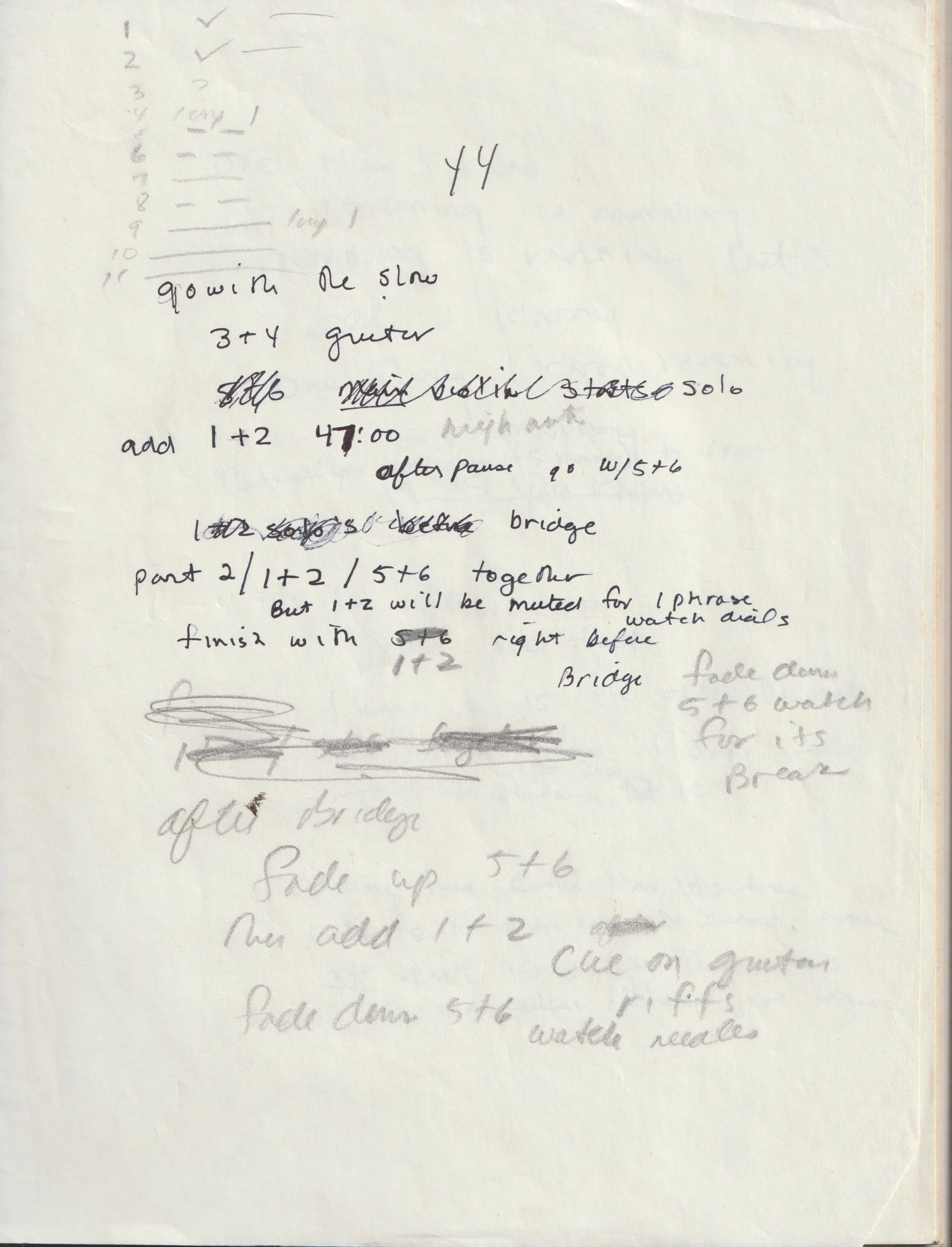
“Go With the Slow” mixing sequence
As I knew the music well, studio owner Todd Lockwood did the fader strip adjustments and I ran the faders, all except the title track that was too complex a mix for me so I asked his assistant Doug Jaffe to do it. It featured my synthesizer, guitar and the rain which I wanted throughout the song. Time was not kind to that one particular track as I felt the rain got in the way of the music itself even as I understood why the decision was made at the time. Since I haven’t had my Otari up and running since the mid 90’s, I sent the original reel to a studio in Indiana to archive the tracks so I could remix the song in Pro Tools, my current method of music production. I was beside myself to turn back the clock and dive into this mix myself, having abdicated that task during the original mixing session. I discovered some of the synthesizer tracks, made on my Casio CZ-101, one of the earliest digital synthesizers made, were not all used and subsequently, I found some gorgeous harmonies never heard on the original. I then added the rain, but only at the beginning and the end, yielding a better flow to the song.
Then I went over every note from start to finish, not re-mixing of course, but doing spot frequency edits of notes that had haunted me these many years. Most if not all of these discrepancies were because my famous Gurian J-B-3 guitar had simply too much power for the dynamic mic’s I was using (Sennhauser 421’s in stereo), and some frequencies couldn’t be tamed without sacrificing the tone of the music as a whole. But in today’s digital world, I was able to eliminate these trouble spots which freed the music from the chains of these minor flaws.
There’s also a certain empowerment I’ve discovered about releasing an album I made 35 years ago, a chance at some overdue recognition that may have been lost in the wake of the 20 albums that followed, including its sequel and most popular album A Sense of Place.
The graphics layout was re-imagined by Pappy Biondo, musician and artist from Hinesburg, Vermont using the original artwork made by legendary artist/designer David Powell, a visual collage artist and retired graphic’s design professor from Plattsburgh State University. Legendary, because one of his first projects was doing the cover for the Allman Brothers’ Eat A Peach record back when he was a college art student in Georgia. David also did all the album cover design for Will Wright’s Rooster Records, both my neighbors in a small hamlet off Route 12 in Barnard, Vermont in the early 80’s. When we needed an image for the cover of Gardener’s Rain, I thought about what he would’ve come up with, suggesting a ‘hoe in a sky’ while David, ever the artist, added the rain.
Pappy and I went through the usual crucible of design using David’s original artwork for both the front and the back, and by updating the liner notes and credits, we provided enough juicy tidbits of information to fulfill the focus for the discerning followers of this most special medium.
So, for the first time ever - a Spencer Lewis album on a 33 RPM Long Playing (LP) vinyl record.
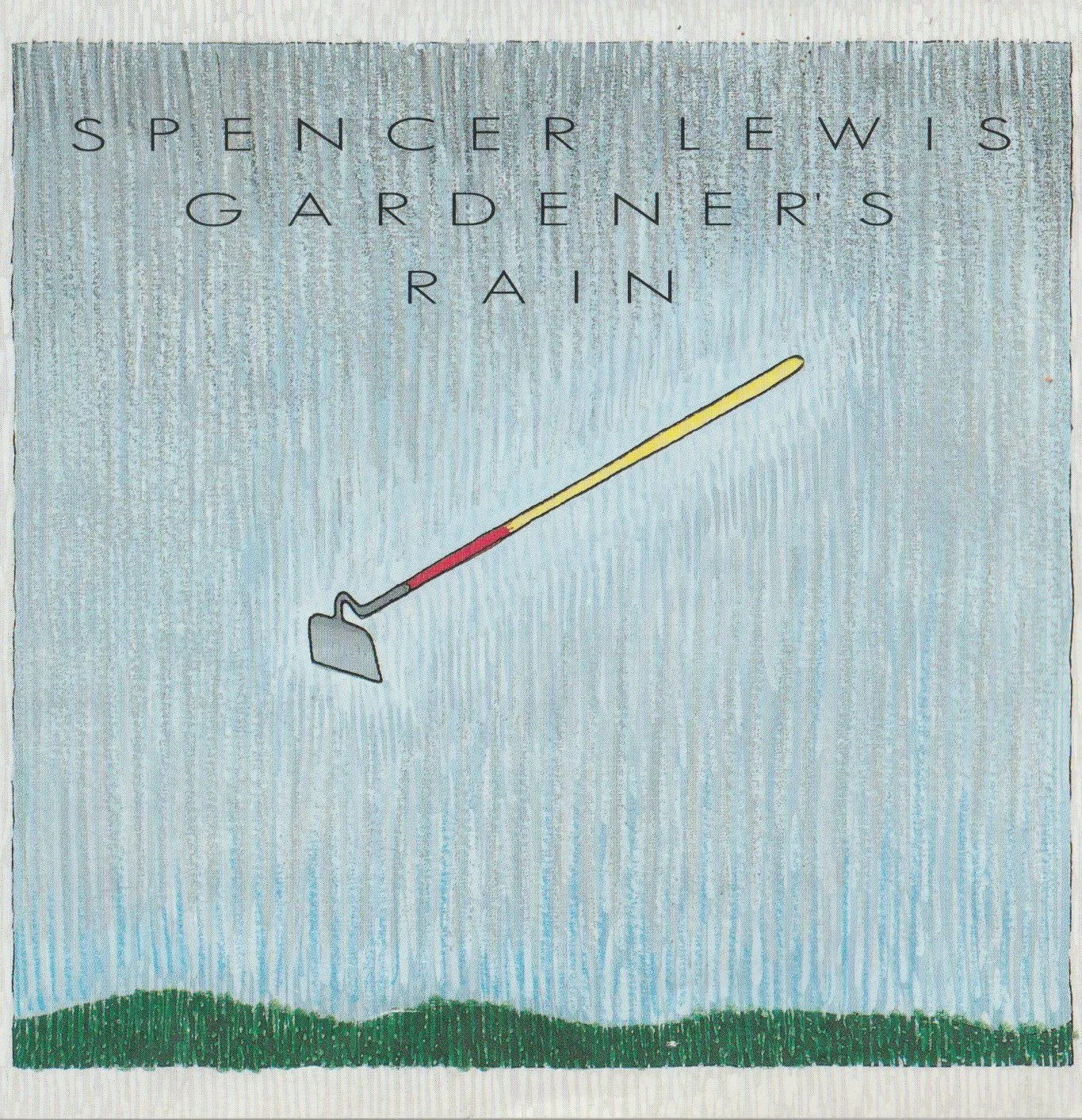
The original cover